

Among the main courses that best represent special occasion cuisine, roast lamb with potatoes occupies a permanent, almost ritualistic place. Its strength lies in the balance between domestic gestures and technical precision, because it requires cooking that respects the fiber of the meat, concentrates its juices, and maintains its aroma. In my recipe, the traditional version of Italian cuisine dialogues with a more delicious note given by the delicate glaze, designed to add depth without altering the identity of the lamb meat. To make the picture even more interesting, it is paired with Amarone della Valpolicella DOCG, a dry passito wine characterized by great structure, persistence, and aromatic intensity, suitable for supporting the succulence of the lamb and the slight sweetness of the glaze. Its notes of ripe fruit, spices, and hints of evolution accompany the roast lamb with great consistency, creating a full, enveloping, and harmonious combination, perfect for Easter lunch.
How to cook roast lamb with potatoes
This recipe is part of the great tradition of Italian cuisine, especially during the Easter period. The most common version includes a leg or shoulder of lamb with potatoes cut into chunks or wedges and seasoned with garlic, rosemary, and white wine. Slow cooking makes the meat tender, thanks also to the skin, which becomes a delicious crust on the outside. In many homes in central Italy, especially in Lazio and Abruzzo, roast lamb is left plain to allow the flavor of the meat to shine through, while in other regions onion, bay leaves, or a richer sauce are added. In Puglia and Basilicata, there are more rustic interpretations, sometimes with cherry tomatoes or pecorino cheese, which make the dish even more intense. The baked potatoes in this recipe absorb the fat, juices, and aromas of the roast lamb. The secret to preparing the perfect roast lamb with potatoes is to cook patiently and without submerging everything in liquid to obtain a balance between juiciness and browning.
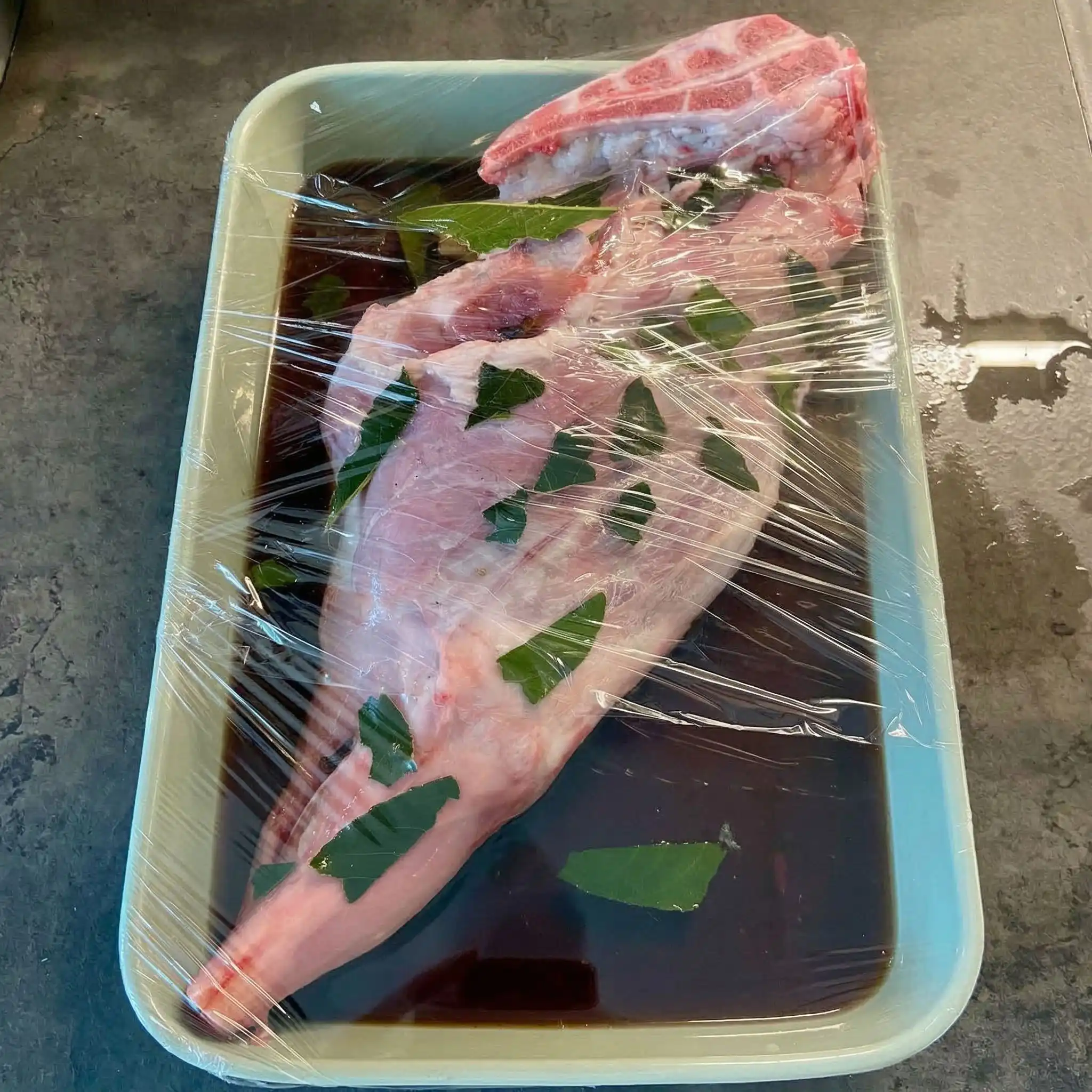
How to marinate lamb for roasting
Marinating roasted lamb is useful when done to bring out the flavour of the meat without overpowering it. The goal is to complement its aromatic profile, make it more harmonious, and prepare it for cooking in a way that enhances its juiciness and depth. Ingredients such as white or red wine, garlic, rosemary, thyme, and bay leaves work well for this purpose when used in moderation and without creating an overly aggressive base. The lamb should not be immersed in a heavy liquid, but simply enveloped in aromas consistent with its sensory characteristics. The marinating time is important, because for a small or medium leg, 8 to 12 hours is usually sufficient. Before putting it in the oven, however, it is important to drain it and pat it dry carefully to ensure even browning. Salt, on the other hand, should only be added just before cooking to prevent the meat from releasing its juices during marinating due to the salt and to make it more pleasant to cut.
Roast lamb with potatoes and wine: the perfect pairing
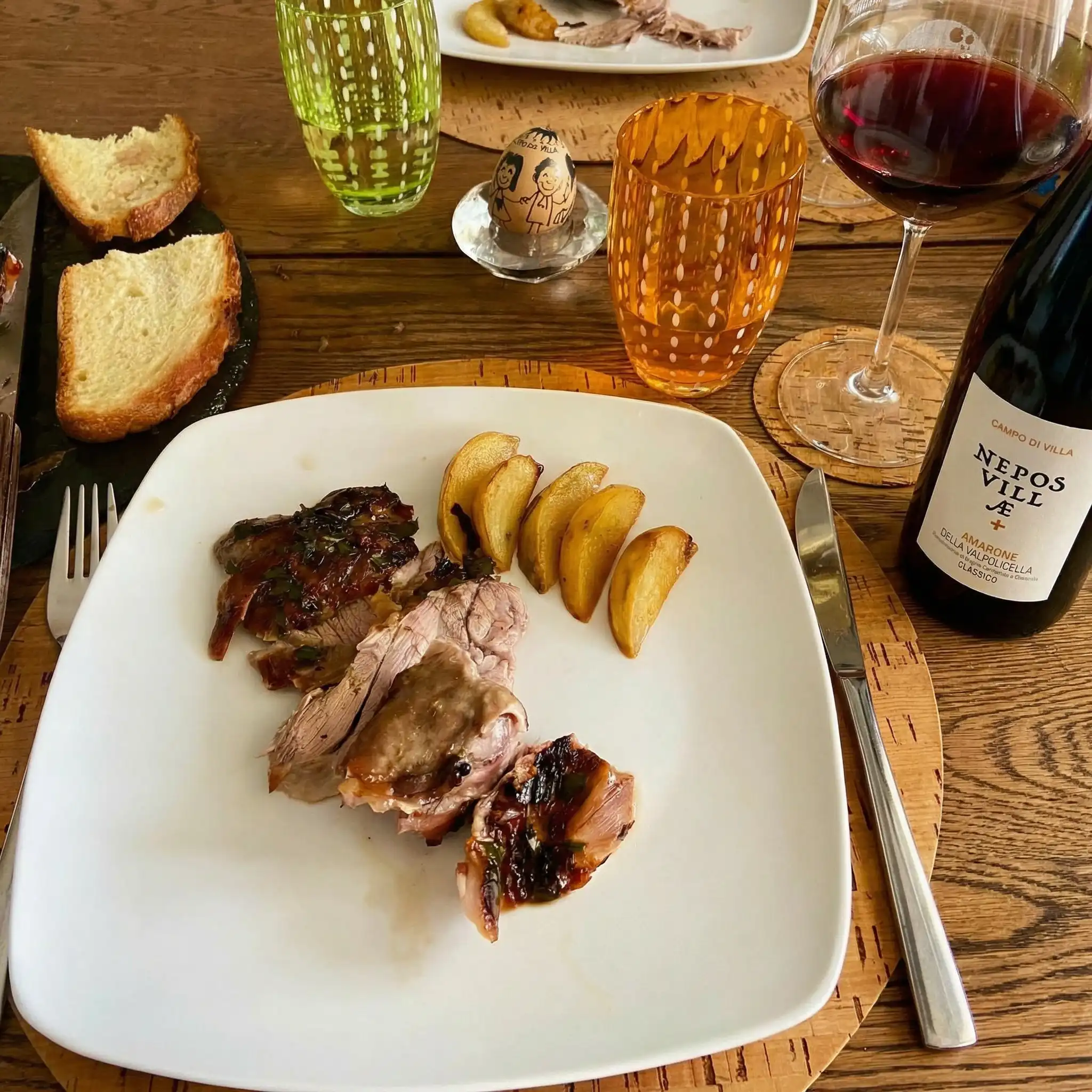
As we have already seen in the article dedicated to cheese and wine and in the article on the original tiramisu recipe, pairing can be done by contrast or by harmony and, in the case of a main course, it is always done by contrast. However, when it comes to pairing by contrast, we must not assume that there is only one possibility. That’s because even the rules of pairing can be interpreted in many ways and should be seen primarily as a tool, not as an absolute truth. So, for my special recipe for roast lamb, I decided to emphasize the intensity and aromatic complexity, the sweetness of the honey, and the intrinsic succulence rather than other sensory characteristics. Chestnut honey provides a wonderful balance of bitter and sweet notes, which is why I consider it only for its intense aromatic component rich in toasted notes. For this reason, for tender and succulent roast lamb, I have come up with a food and wine pairing that I am sure will delight all lovers of powerful red wines. It is by no means a banal suggestion, but it is absolutely spot on, and now I will explain why.
Amarone della Valpolicella DOCG
Honey-glazed roast lamb pairs perfectly with an Amarone della Valpolicella DOCG such as Nepos Villae. This is because Amarone is a dry passito wine and therefore shows an overall profile of alcohol, aromatic intensity and smoothness that pairs beautifully with the richly flavoured lamb and its honey-glazed skin, crisp and sweet-bitter, provided that the glaze is not excessive. The pairing with Amarone della Valpolicella DOCG works because it brings together structure, smoothness, and aromatic intensity. The honey-glazed roast leg of lamb has a juicy and fatty component, a slight sweetness from the glaze, and a marked taste and aroma persistence. Amarone della Valpolicella, in fact, manages to support this complexity without being overpowered. The tannins and significant dry extract interact with the fiber and protein content of the meat, while the evolved notes of fruit preserved in alcohol, spices, medicinal herbs, and sometimes cocoa/coffee find a natural echo in the Maillard reaction that occurs during oven browning, in the aromatic herbs, and in the sweet-bitter nuance provided by the chestnut honey in the glaze.
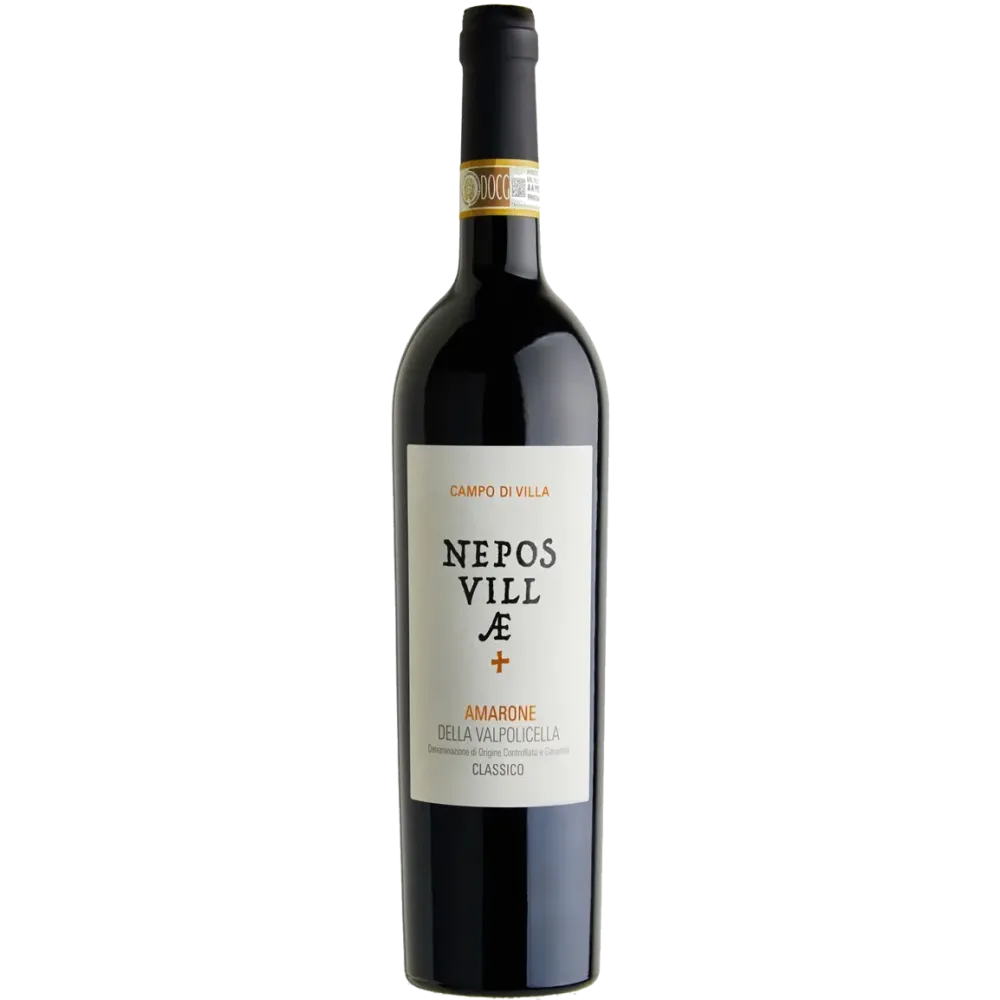
Amarone della Valpolicella Classico “Campo di villa” Nepos Villae
Nepos Villae
Veneto
2016
50.00 €
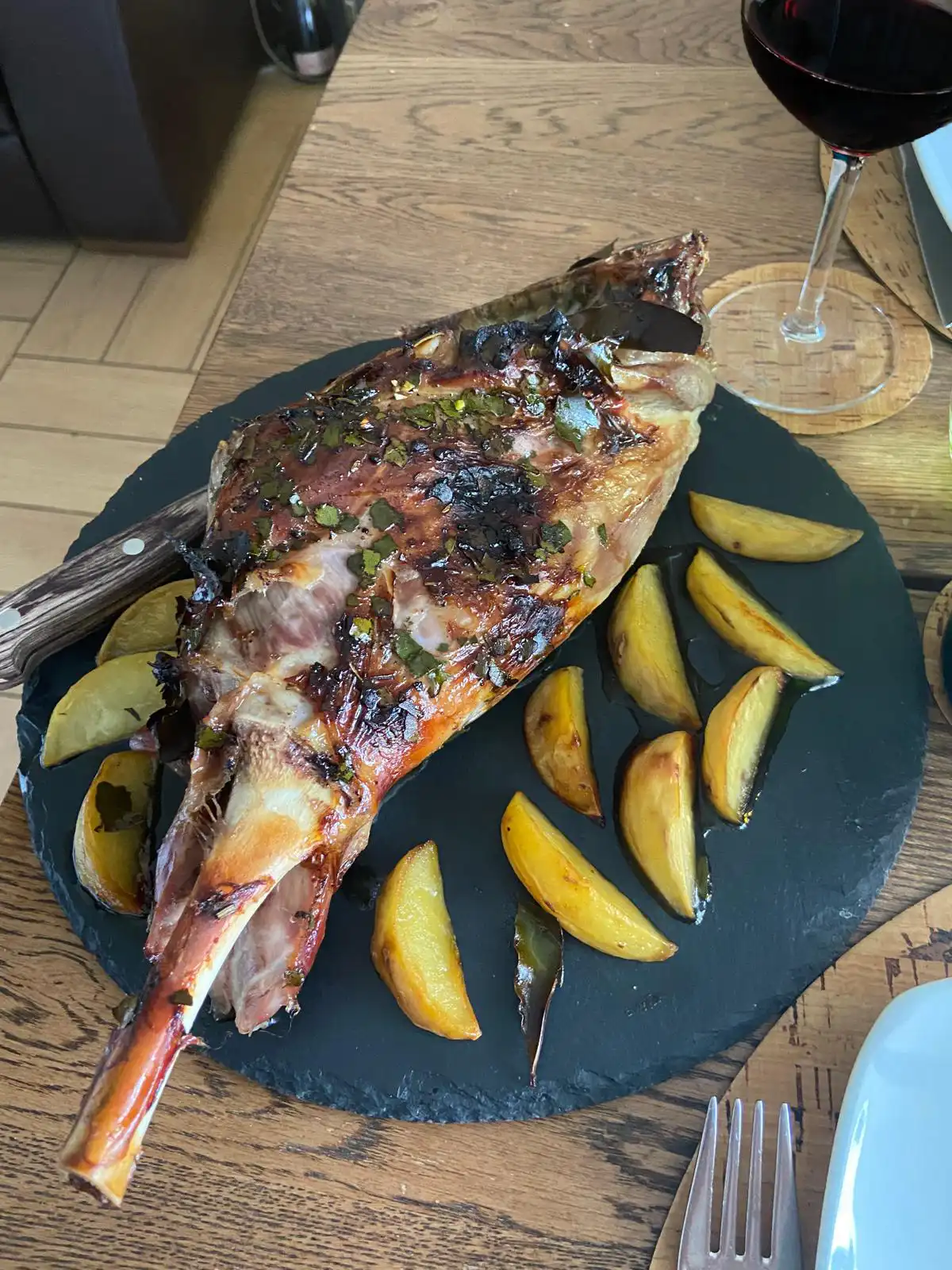
Tender and juicy roast lamb
To obtain tender and juicy roast lamb (weighing approximately 1.1-1.3 kg), the most reliable method is as follows: marinate in herbs for 8-12 hours, pat the meat dry before roasting, cook for 15 minutes at 220°C to brown, then 40 minutes at 160°C in a static oven. In the last 20 minutes, you can add the honey glaze. Finish with 5 minutes at 200°C for the final browning. The resting time should be short, about 5-7 minutes, covering the leg (with a lid, aluminum foil… but without the cover touching the crust). The three mistakes that dry out lamb are always the same: putting it in the oven while it is still wet with marinade, using honey too early, and overcooking it. If you want really juicy meat, the center should remain slightly pink or at most pale pink, not gray. The liquid in the pan should also be measured carefully: a little red wine and a little water are enough to create a useful base without turning the cooking into braising. The correct result is meat that is roasted on the outside, soft on the inside, and shiny on the surface.
Ingredients for 2 people
- 1 leg of lamb, about 1.2 kg
- 5–10 g fine salt
- 4 medium-large oval potatoes
For the marinade:
- 1 glass red wine similar to the one you will pair with the dish
- 2 tablespoons high-oleic sunflower seed oil
- 2 garlic cloves
- 2 sprigs fresh rosemary
- 4–6 bay leaves
For the glaze:
- 2 tablespoons chestnut honey
- 1 teaspoon mild mustard
- 2 tablespoons cooking juices
Recipe
Step 1. Finely chop the garlic and rosemary together, then place them in a bowl and add the oil and the red wine. Whisk with a whisk or a fork until you obtain a fairly homogeneous mixture. Take a freezer bag large enough to contain the leg of lamb, add both the marinade and the meat, then close it with a knot. Move it around slightly to distribute the marinade and place it in the refrigerator for up to 24 hours.
Step 2. Take the lamb out of the refrigerator 1 hour before cooking. Pat it dry with paper towels until it is well dried. Take the fine salt and massage the meat to distribute it evenly. Let it rest until cooking.
Step 3. Peel the potatoes. Wash them and then dry them with paper towels. Cut each potato in half and from each half obtain 3 wedges. Set them aside.
Step 4. Strain the marinade and place 100 g of it in a small saucepan with 100 g of water. Bring to a boil and let it reduce for 10 minutes.
Step 5. Preheat the static oven to 220°C and roast the lamb for 15 minutes to give an initial boost to browning. Remove the leg of lamb from the oven and add the cooking liquid to the roasting tray. Add the potatoes, keeping them well separated from each other. Lower the oven to 160°C. Once the oven reaches the correct temperature, cook for about 30 minutes.
Step 6. A few minutes before the end of cooking, in a small bowl whisk together the honey with the cooking juices and the mustard. Remove the leg of lamb from the oven and brush it carefully, then return it to the oven for 10 minutes. Repeat 3 times. Meanwhile, turn the potatoes, always taking care to keep them well spaced apart.
Step 7. Remove the lamb from the oven. Increase the temperature to 200°C and, once ready, return the leg of lamb to the oven for 5–10 minutes to form a delicious crust.
Tips for success
Here is a summary of the article with 3 rules to keep in mind to prepare the perfect roast lamb with potatoes:
- Pat the meat dry well after the marinade to obtain perfect browning. If the leg of lamb goes into the oven too wet, it tends to cook in a humid way and the surface struggles to brown properly, or the Maillard reaction does not start evenly. The aromas of the marinade will remain anyway, so calmly remove the excess liquid with kitchen paper.
- Add the honey only in the final phase. At high temperature honey caramelises quickly and can become dark, bitter and unpleasant on the palate. The glaze should be brushed only in the last 15–30 minutes, in 2 or 3 thin layers.
- Let the leg of lamb rest before cutting it for about 5–7 minutes. This technical detail is fundamental because it allows the juices to redistribute inside the meat. If you cut it immediately you will lose moisture and obtain slices that are less tender and less regular.
I sincerely hope you find this article useful! If you need advice on what to buy or pairing suggestions, leave me a comment!
Chiara

0 Comments