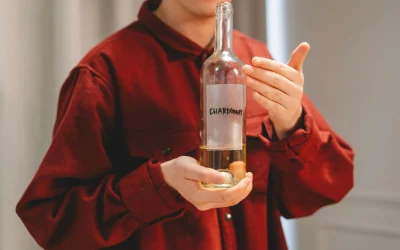

Tiramisù is a famous Italian dessert that almost everyone loves and has become a symbol of Italian cuisine thanks to three main characteristics, it is delicious, affordable, and quick and easy to make. With just a few simple tips explained in this guide, anyone can prepare a perfect tiramisù in under 15 minutes. However, when we talk about the original tiramisù recipe, it is important to distinguish between two very similar versions that differ only in the use of eggs, as I will explain shortly in the recipe. In any case, the ingredients you need are the same, so you can head to the supermarket… right after ordering the perfect wine on Italovino! 😉
The story behind tiramisù
Although today it may seem like a national monument, tiramisù is actually a relatively modern dessert. It gained popularity between the 1960s and 1970s in North East Italy, with Treviso playing a leading role thanks to the version made famous by Le Beccherie, a clean, linear recipe with egg yolks, sugar, mascarpone, coffee, ladyfingers, and cocoa, the one whose recipe I will share shortly. The creation of tiramisù is associated with Alba di Pillo and her husband Aldo Campeol, owners of Ristorante Le Beccherie, and their pastry chef Roberto Linguanotto, who transformed a family recipe into a restaurant dessert. Le Beccherie is a historic restaurant in the center of Treviso, known for regional cuisine and for being the place where tiramisù was officially codified and first added to a menu in 1972. Then the magic happened, it was easy to replicate, everyone loved it, and within a few years it appeared everywhere, from trattorias to fine dining restaurants. However, this is not a one sided story. In Friuli Venezia Giulia, very similar preparations were already circulating, and for this reason the region included tiramisù among its PAT, Traditional Agri food Products, officially recognizing two historical traditions, one sliced and made with ladyfingers, often lighter and airier, and one served in a cup, similar to Tirime su, made with sponge cake, zabaglione, and Marsala.
Tiramisù and wine, the perfect pairing
As we have already discussed in our article on cheese and wine, pairings can be built either on contrast or on harmony, and when it comes to desserts, harmony is always the rule. In a harmonious pairing, the goal is to mirror the sensations of the dish in the wine, allowing them to support and amplify each other rather than compete. Tiramisù may be easy to make, but it is surprisingly complex to pair. The soft aromatics and richness of mascarpone and egg yolk, together with the sweetness of sugar, would normally suggest a delicate, sparkling wine to refresh the palate. Bitter cocoa and coffee, however, change the picture entirely. Both bring not only bitterness, but also considerable aromatic intensity and long persistence on the palate. This is why the idea of relying on bubbles, which would work perfectly with a simple mascarpone cream, no longer applies here. Tiramisù calls instead for a more structured wine, one with a deeper and more expressive aromatic profile. With this in mind, for the original Treviso style tiramisù, I have selected two food and wine pairings designed to appeal to red wine lovers. They are not the most obvious choices, but they are remarkably well suited to this dessert.
Pairing proposal 1, Recioto della Valpolicella DOCG
My favorite pairing for the original Treviso style tiramisù is a Recioto della Valpolicella DOCG, such as the one produced by Nepos Villae. It works particularly well thanks to the balance between structural harmony and flavor compensation. “La Tesa” by Nepos Villae is unmistakably a sweet Recioto, with a full, velvety opening that allows it to stand up to the richness and sweetness of the mascarpone cream. In tiramisù, the creamy, fatty component tends to coat the palate, but the wine’s freshness and subtle saline edge, highlighted by the producer as a key element of drinkability, help cleanse the mouth without breaking the dessert’s overall sweet balance. Finally, the wine’s aromatic intensity, with notes of ripe fruit and sweet spices, holds its own against the bitter intensity of cocoa and coffee, engaging with them rather than being overwhelmed.
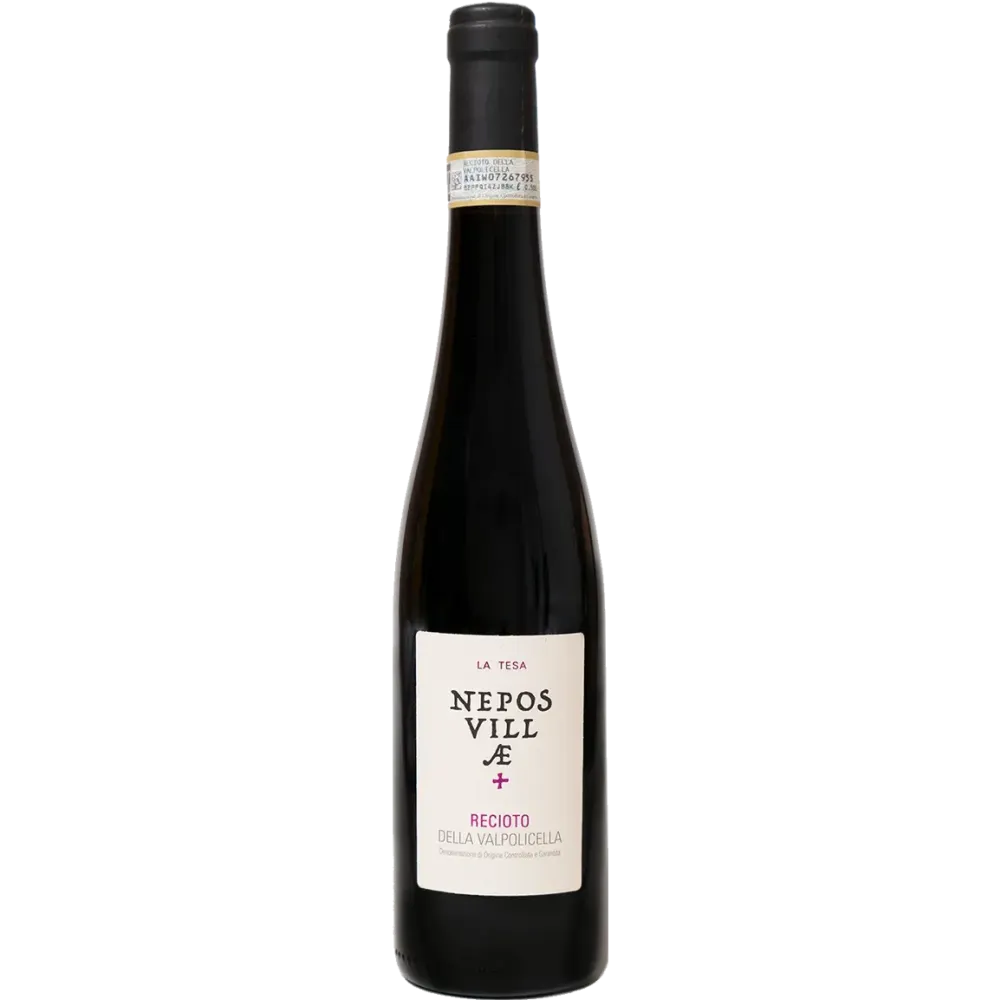
Recioto della Valpolicella “La tesa” Nepos Villae
Nepos Villae
Veneto
2021
28.00 €
Pairing proposal 2, Amarone della Valpolicella DOCG
An alternative pairing is an Amarone della Valpolicella DOCG, such as the one produced by Nepos Villae. While this is not a strictly harmonious pairing, Amarone is a dry passito wine and, as such, offers a combination of alcohol, aromatic intensity, and softness that works remarkably well with this dessert, provided the sugar is kept in check. If you are not a fan of sweet wines, this is the best option I can suggest. I recommend trying it regardless, as it may well surprise you.

Amarone della Valpolicella Classico “Campo di villa” Nepos Villae
Nepos Villae
Veneto
2016
50.00 €
Original Treviso style tiramisù recipe
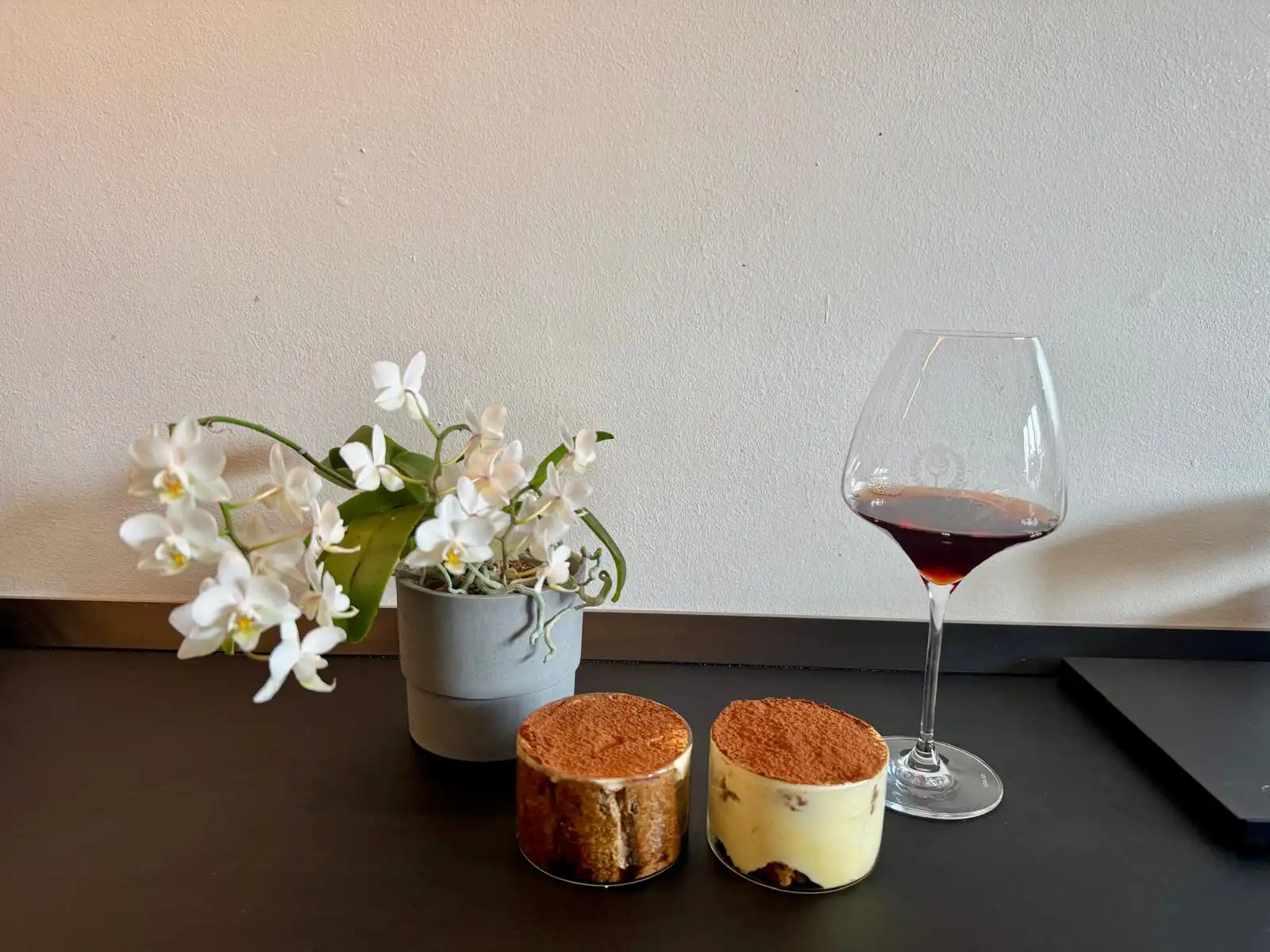
As mentioned earlier, the difference between the recipe served at Le Beccherie and the PAT version lies in how the eggs are handled, specifically in the use of egg whites.
Ingredients for 2 people
- 125 g mascarpone
- 1 medium egg
- 2 to 3 tablespoons granulated sugar, depending on how sweet you like it
- 8 to 12 ladyfingers (italian savoiardi), depending on the size of the container
- 4 cups of long coffee, I used a 4 cup moka pot
- Unsweetened cocoa powder, to taste
If you are making the original Treviso style tiramisù, you will only use the egg yolk. For the PAT version, the egg whites are used as well.
Preparation steps
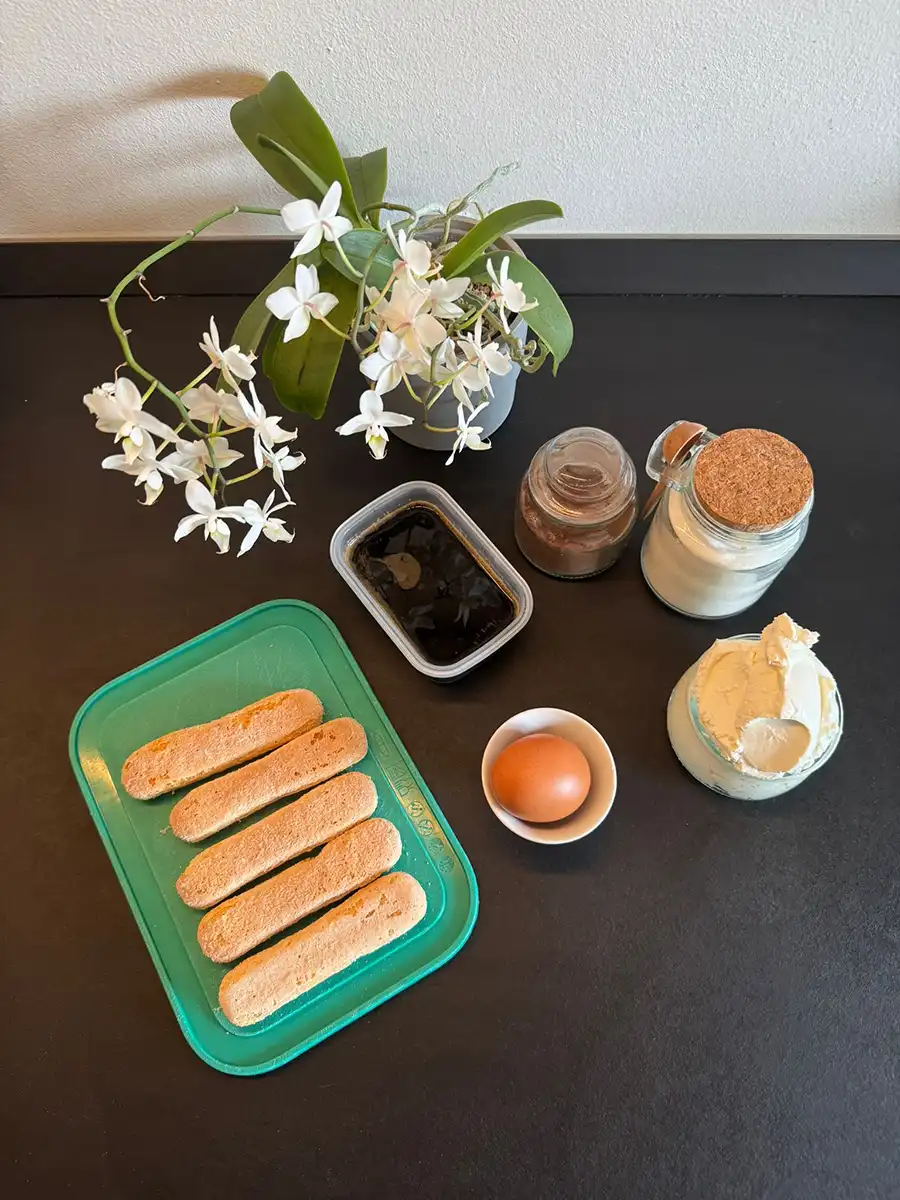
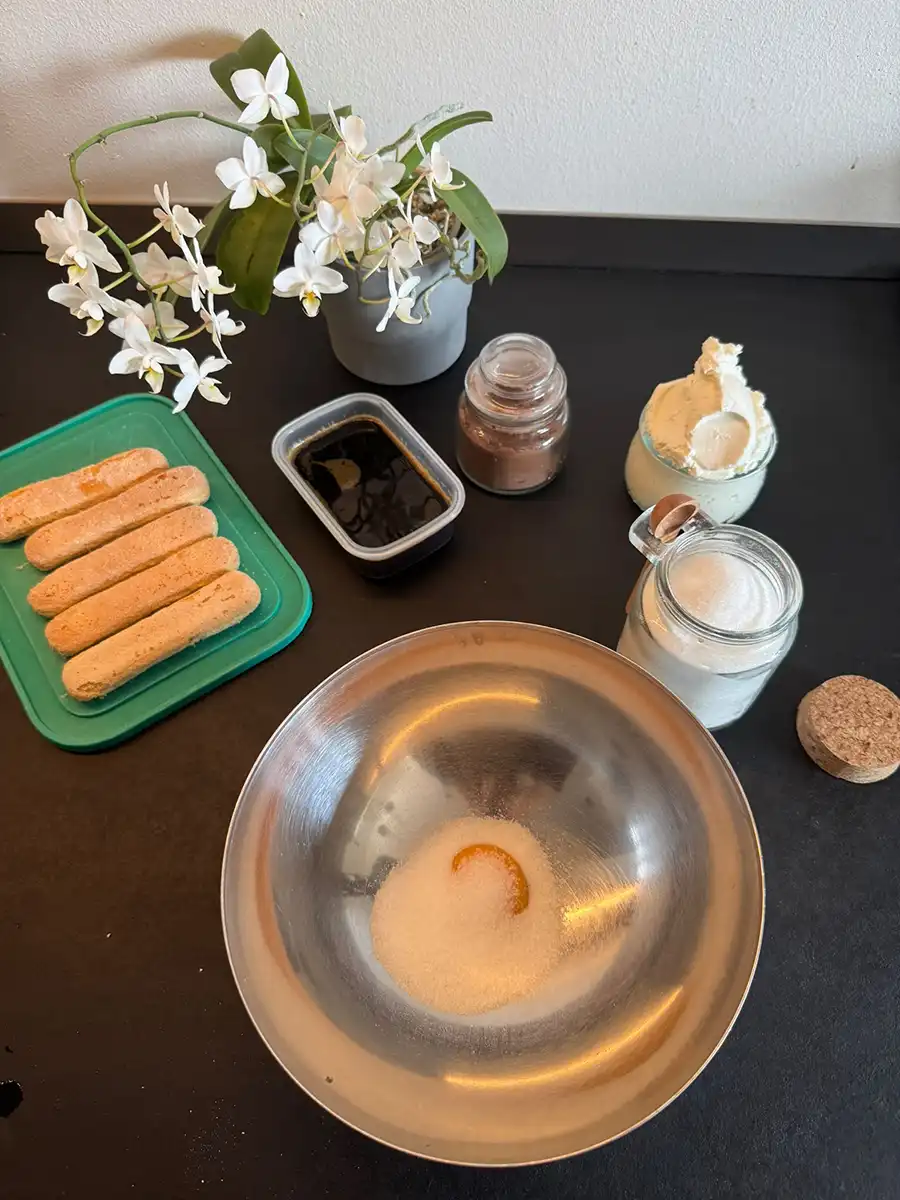
Step 1. Brew the coffee, pour it into a small bowl large enough to fit a whole ladyfinger, and let it cool completely. It is essential that the coffee is fully cold.
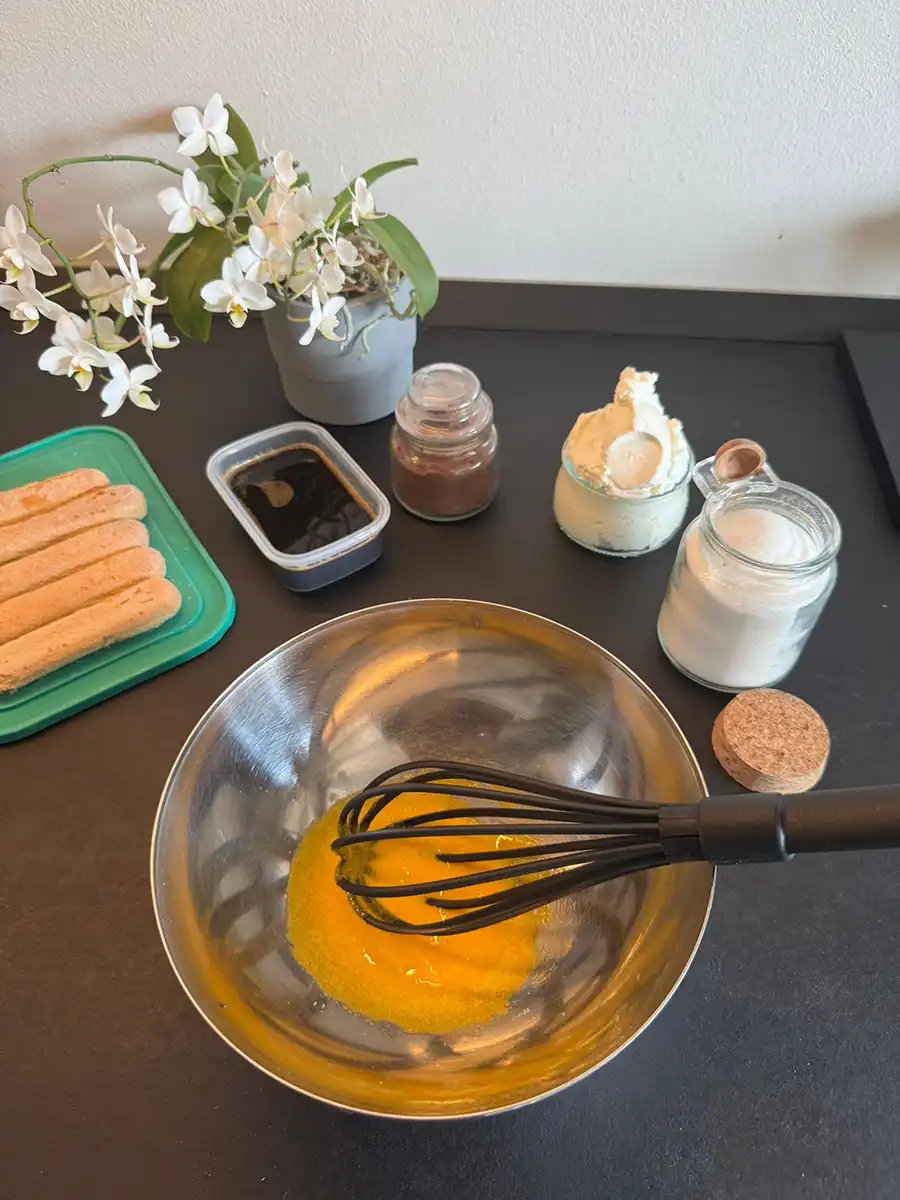
Step 2. In a medium sized bowl, whisk the egg yolk with the sugar by hand or with an electric mixer until pale and creamy, this should take just under two minutes.
Step 3. Using a spoon, briefly stir the cold mascarpone straight from the fridge until smooth and uniform.
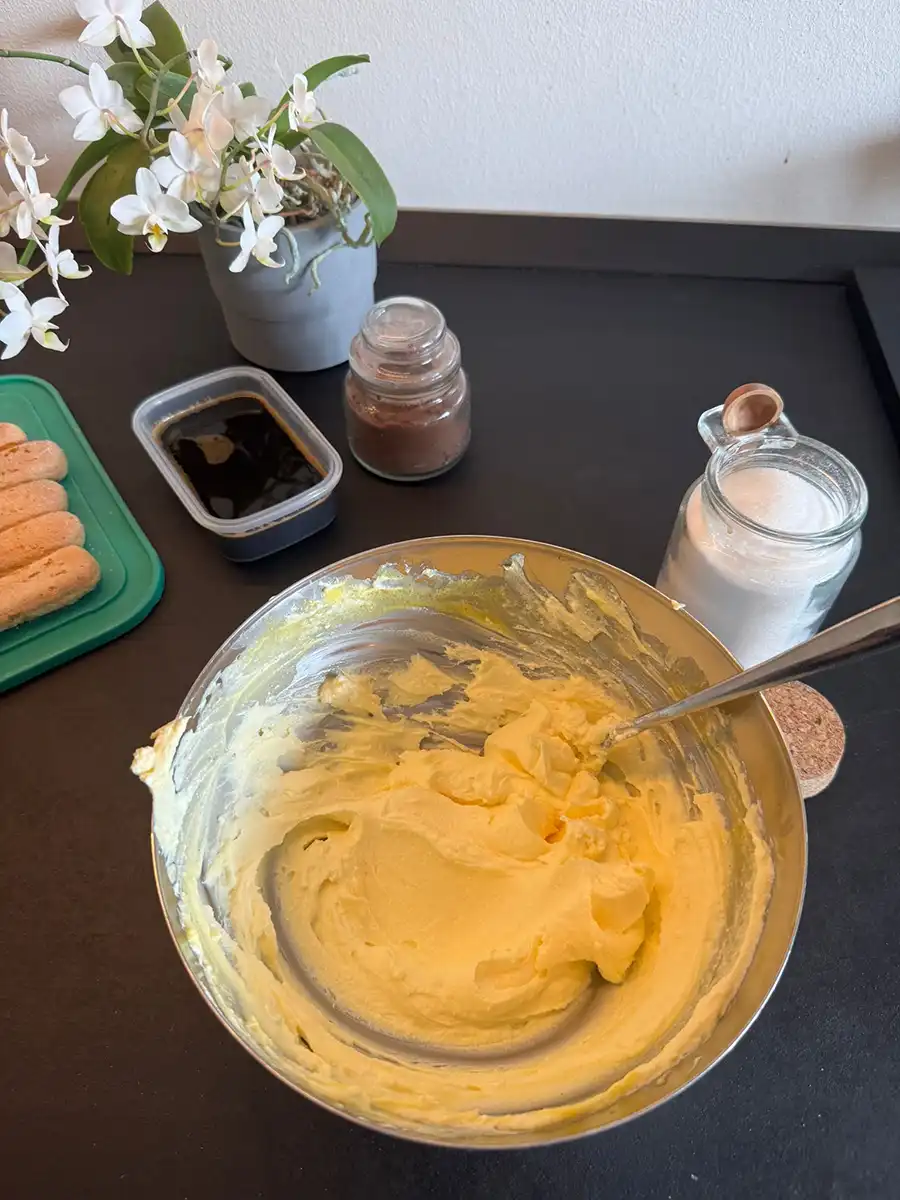
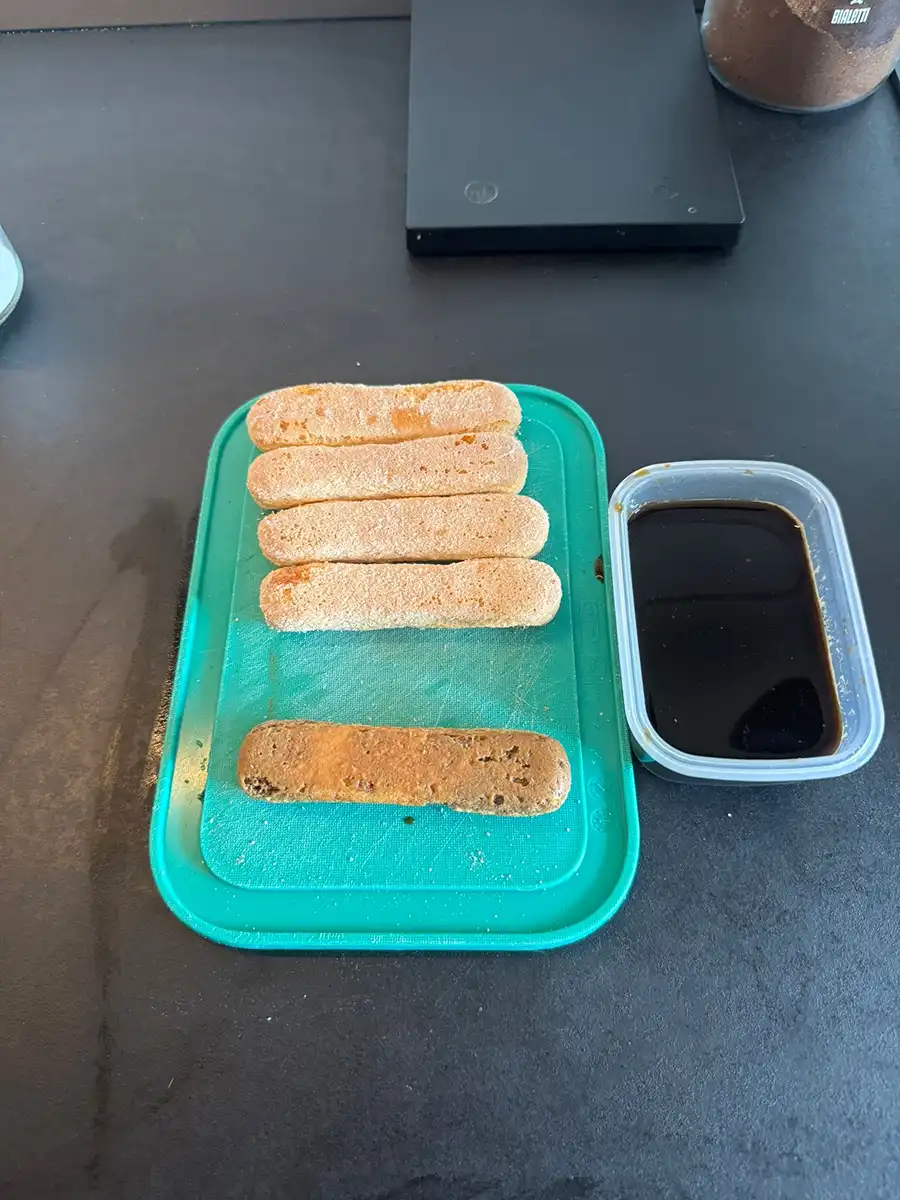
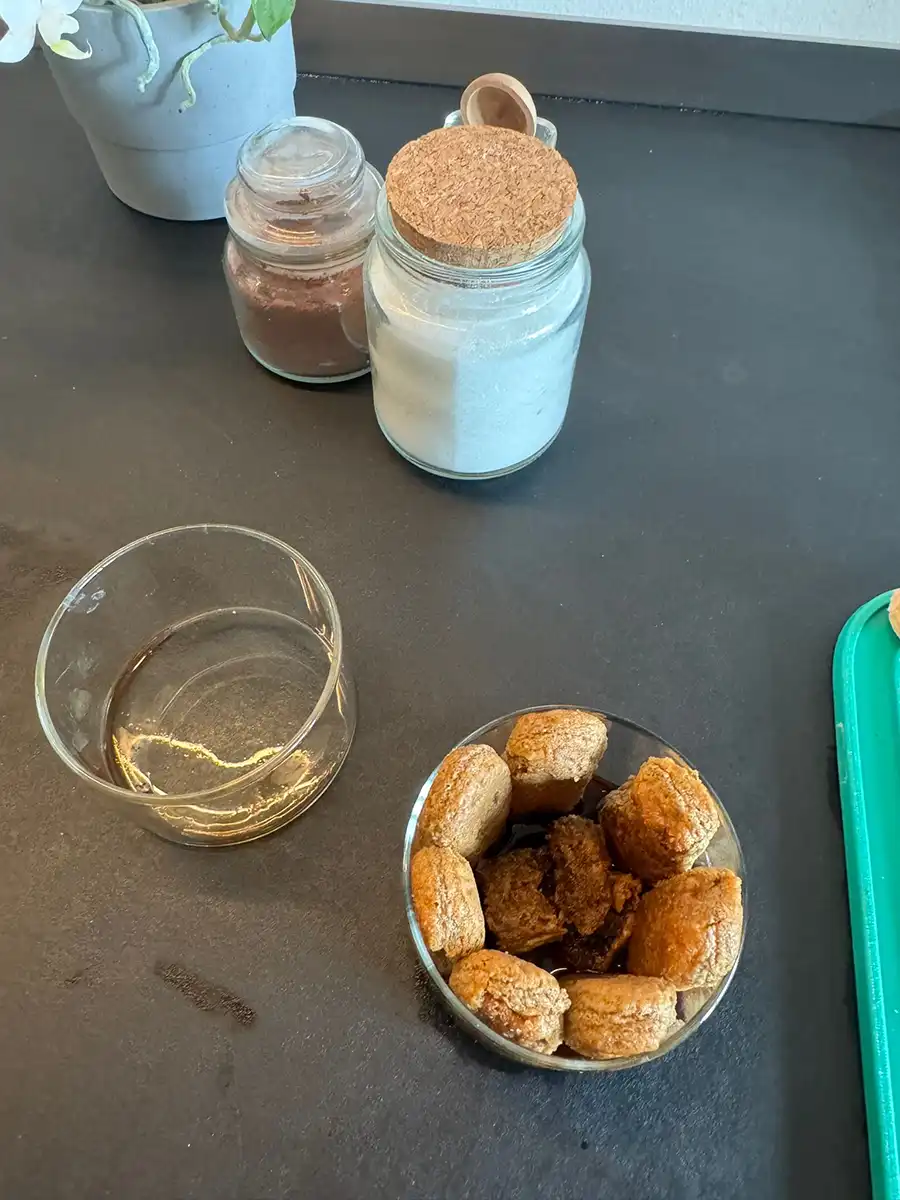
Step 4. Dip each ladyfinger into the coffee for a few seconds on each side. Adjust the soaking time depending on whether you prefer the biscuit softer or more firm. If this is your first time making the original Treviso style tiramisù, try soaking one or two ladyfingers first to find the texture you like before moving on to the rest.
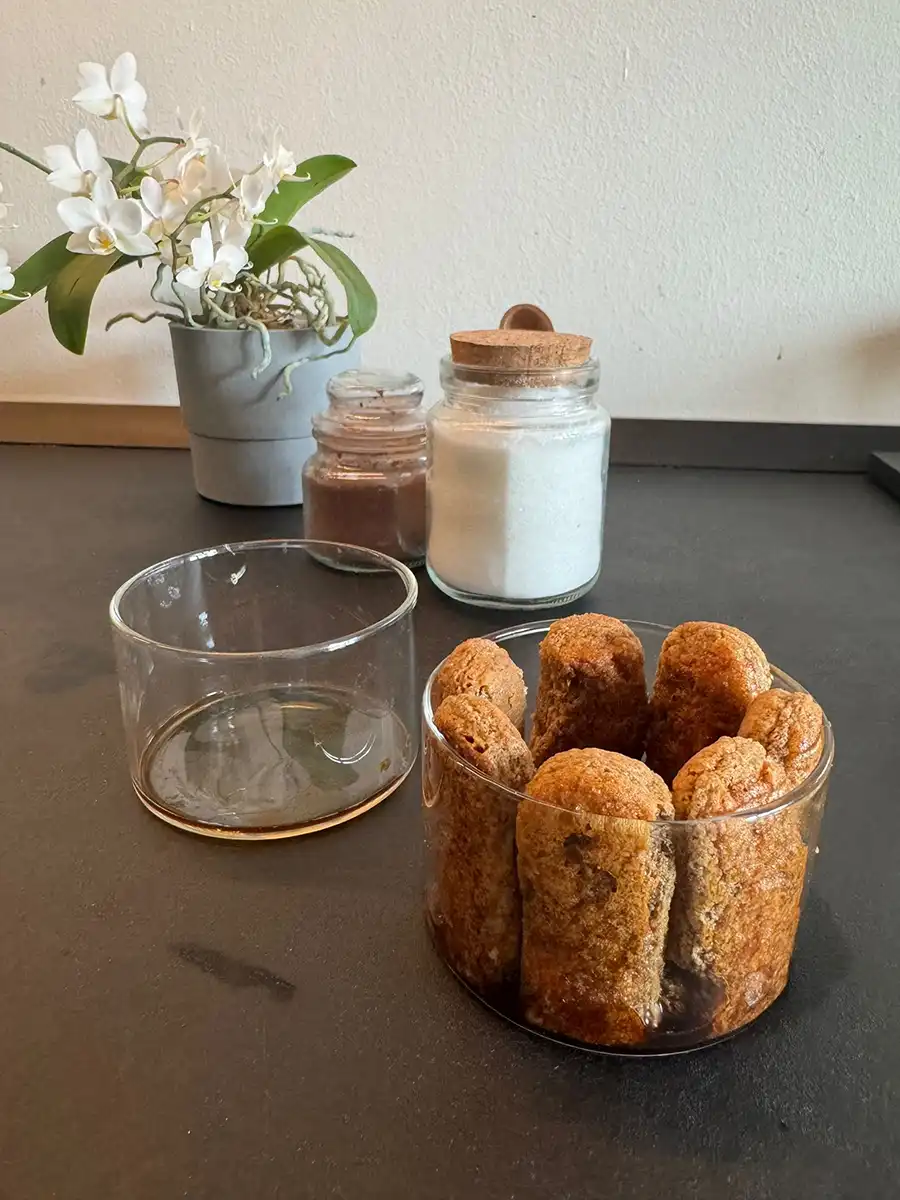
Step 5. Cut the ladyfinger in half and arrange it along the inside edge of the glass, covering the entire perimeter. Add another halved ladyfinger in the center and gently press it down with a spoon. Alternatively, if this feels too tricky, simply cut the biscuits in half, place them on the bottom, and build layers of biscuit and cream, much like a lasagna.
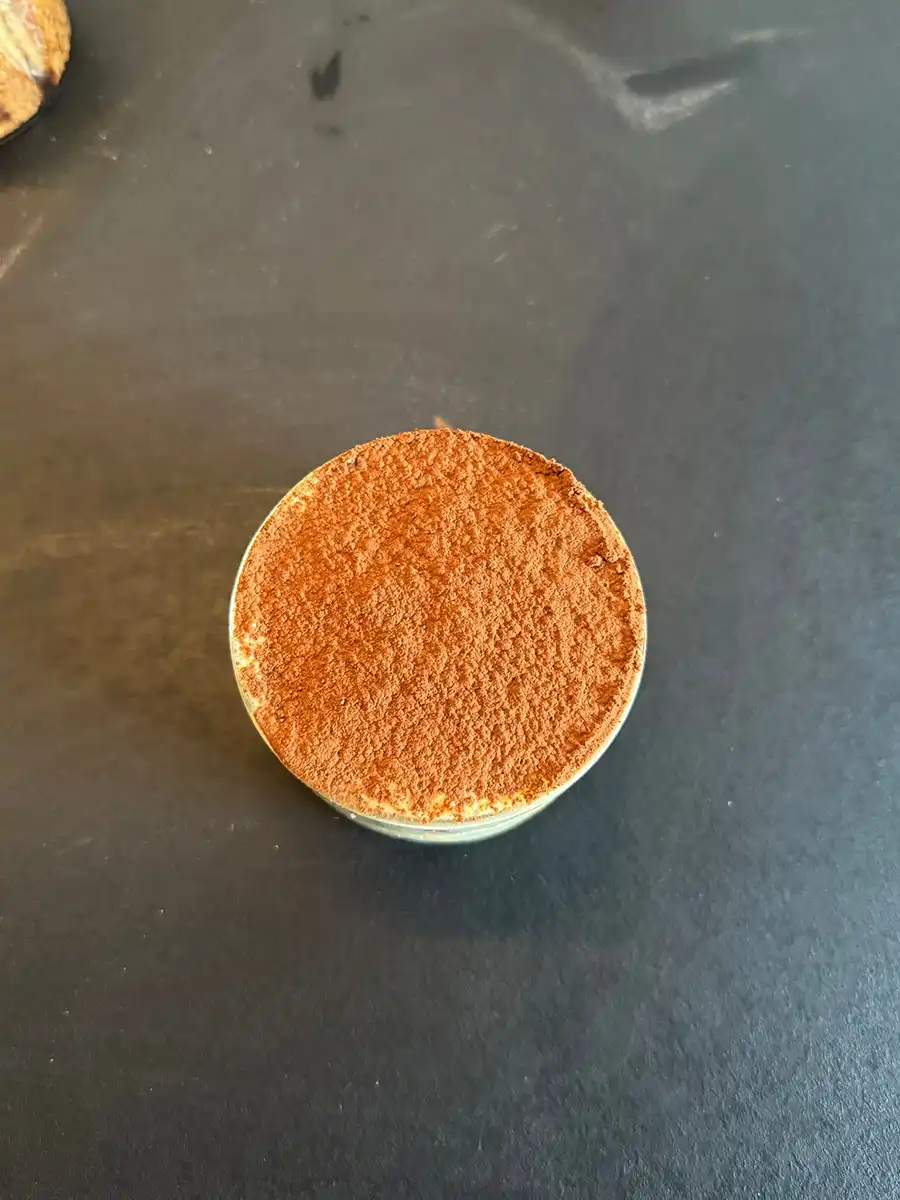
Step 6. Fill with mascarpone cream and dust with unsweetened cocoa powder, using a sieve for a lighter, more even finish.
If you would like to try the Friuli Venezia Giulia PAT version, at step 3 gently fold in the egg whites whipped to stiff peaks with one tablespoon of sugar. This means using one or two tablespoons of sugar for the yolks and one tablespoon for the whites. Fold from bottom to top until you have a smooth mousse. In this version you can mix slightly longer than in the Treviso recipe, but be careful not to overwork it or the egg whites will deflate. To allow the dessert to set, I recommend refrigerating it for at least four to six hours before serving. If you are short on time or feeling impatient, fifteen minutes in the freezer will still give you a delicious result.
Tips to avoid mistakes
To wrap things up, here are three key points to keep in mind.
- If you prefer a creamier texture, use mascarpone and egg yolks straight from the fridge. If you are after a lighter, mousse like consistency, let both the mascarpone and the egg yolks come to room temperature before using them.
- If you are unsure what to do with the two egg whites, you can whip them to stiff peaks and fold them into the mascarpone cream after step three, using a gentle bottom to top motion to incorporate air. This will give you a lighter texture and follows the version officially registered as a PAT in Friuli Venezia Giulia.
- If sweet wines are not your thing, opt for a dry passito red such as Amarone della Valpolicella DOCG. This is a borderline pairing, neither based on contrast nor on pure harmony, but its softness works well with the dessert, especially if you have been restrained with the sugar.
I truly hope you found this article helpful. If you need advice on choosing a bottle or pairing wine with food, feel free to leave a comment.
Chiara